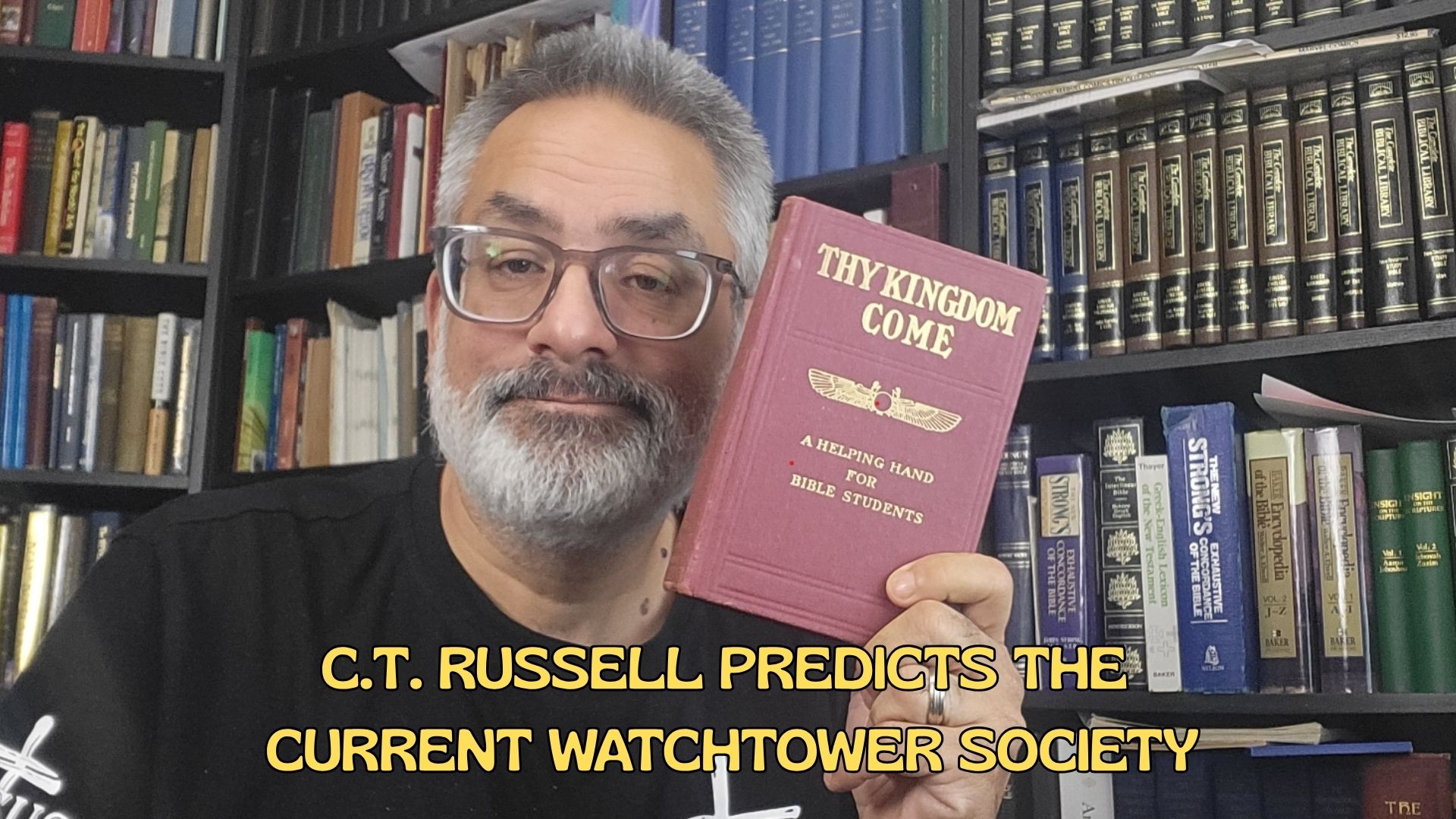
In 1891, C.T. Russell wrote and published the third volume of the “Studies in the Scriptures” series, titled “Thy Kingdom Come.” This work has since played a crucial role in shaping the early theology of Jehovah’s Witnesses. Study VI, focusing on “The Work of the Harvest,” explores the responsibilities and activities linked to the fulfillment of biblical prophecy about the end times.

On pages 184 and 185, Russell offers a pointed critique of the current state of the Watchtower Society. He highlights the dangers of organized religion and the resulting spiritual bondage and abuse that can occur. Russell voices his concern that the very institution he founded—originally meant to free believers from the constraints of traditional dogma and church hierarchy—had transformed into a structure reflecting many traits he had passionately opposed in mainstream Christianity.
His insights convey a deep sense of disappointment and urgency, underscoring the need to return to the fundamental teachings of Christ and the Scriptures. He warns against the threats posed by rigid church hierarchies, which can hinder spiritual growth and manipulate followers through fear instead of fostering genuine faith.
As he articulates his critique, Russell references Scripture to emphasize the importance of a personal connection with God, urging followers to seek truth independently rather than relying solely on organized authority. This message resonates with those disenchanted by conventional religious practices, calling for a grassroots movement centered on personal spiritual empowerment and understanding.
By examining the evolution of the Watch Tower Society, Russell’s writings prompt readers to reflect on the broader implications of religious organization and the pursuit of authentic spiritual experiences. His observations serve as a reminder that even movements founded on a desire for reform and renewal can unintentionally reproduce structures of control, challenging believers to stay vigilant against the encroachment of institutional dogma in their spiritual journeys.
Leave a Reply