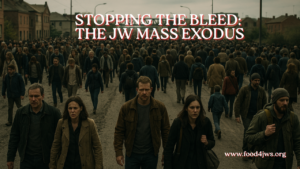
Hey, so it’s 2026, and the Watchtower Bible and Tract Society is at a pretty big crossroads. It used to be this beacon of religious growth, but now it’s turned into a massive corporation with a huge real estate portfolio and millions of dedicated followers. But here’s the kicker: recent data shows there’s a legitimacy crisis brewing that could really shake things up.
Now, this isn’t just about religious persecution like the Governing Body would have you believe. The truth is, there’s a noticeable decline happening, and it’s fueled by some internal contradictions, legal troubles, and a real struggle to keep up with the digital age. You can see the signs everywhere—like the selling off of Kingdom Halls, younger folks not sticking around, and the Society trying to tweak its doctrines just to dodge legal issues in places like Australia, Norway, and Spain. Nowadays, people see the Society less as a vibrant movement and more like a real estate company that’s just trying to stay afloat financially, while its claim to exclusive divine truth is losing its shine pretty fast.
You know, these days, a lot of people are stepping away from being Jehovah’s Witnesses, and there are some pretty big reasons for that. For starters, trust in their beliefs is really starting to fade. Recent changes have shaken things up between the leadership and the members. Things that used to be super important, like the beard policy, just got changed out of the blue, and nobody really acknowledged the pressure that members were under. Dress codes and shunning practices have also seen some shifts. Disfellowshipping, which has been a control tactic for over fifty years, has recently been softened because of legal pressures, allowing for quick hellos with disfellowshipped family members. They’re calling this change a kind gesture, but it feels more like they’re worried about legal issues than actually finding new insights in the Bible. Loyal members are feeling pretty lost since these changes seem more about politics than spirituality, which is causing a crisis of legitimacy and loyalty.
Witnesses who gave up relationships, jobs, and their freedom for what they thought were divine commands are now facing a tough reality. (Now, I’ve over come those issues, but many haven’t). The Governing Body isn’t really acting like prophets anymore; they’re more like administrators, just trying to manage legal risks and how they’re seen publicly. Elders who used to enforce the rules are now stuck with tough questions, like how to explain a changed beard policy to someone who lost their privileges because of it. The usual reassurances about trusting the Governing Body just don’t hit the same anymore, since it seems like these changes are coming from outside pressure rather than true beliefs. This loss of confidence goes beyond just policy changes; if the organization can mess up on things like beards and shunning, what else might they be getting wrong?
You know, their belief system really hinges on a solid trust in authority. But when that trust starts to waver, doubts can spread like wildfire. Plus, they’re facing some serious legal challenges and financial strains, especially in Europe. Countries like Australia, Norway, and Spain have thrown some major legal hurdles their way, and others are starting to follow suit. Back in 2021, Norway pulled the Jehovah’s Witnesses’ religious status, cutting off crucial funding because they claimed their shunning practices were violating children’s rights and amounted to psychological abuse. This move really highlighted a clash between how the organization disciplines its members and what human rights standards expect, leading to immediate financial hits and a big blow to their credibility.
They’ve had a tough time in Norwegian courts, getting shot down repeatedly in their appeals. Then Spain jumped in and took away their public utility status, which meant losing tax benefits and recognition, all because of ongoing family separations and psychological manipulation, especially affecting kids. So, instead of standing their ground, the Governing Body decided to change their policies in response to these legal troubles. They rolled out new guidelines on shunning and family ties pretty quickly after the setbacks. This shift shows how flexible their so-called unchangeable biblical principles can be when money is on the line. The Watchtower Society, which relies on government support and tax perks while dealing with dwindling membership and literature sales, has sold off billions in properties, especially in Brooklyn, and has merged congregations to save resources. Their new media center in Ramapo, New York, really highlights how urgent the need for funding is while still trying to keep that tax-exempt status. It raises some eyebrows about their credibility since members are noticing how doctrinal changes seem tied to financial pressures, making younger folks see the organization as putting financial interests ahead of biblical truths.
The psychological impact of ending the reporting system for Jehovah’s Witnesses is pretty big. For almost a hundred years, the field service report was key for tracking spiritual health, with publishers sharing detailed stories about their ministerial work. This system shaped how individuals and congregations were viewed by God, creating a kind of hierarchy where those who hit their hourly goals got more recognition, while those who didn’t often felt left out. The organization really pushed this idea through various communications, celebrating the top performers. But then, in November 2023, the governing body dropped a bombshell: starting January 2024, publishers wouldn’t have to report their hours anymore, saying it was too competitive. This left a lot of people scratching their heads, especially those who had built their identities around these numbers and even changed careers for pioneering status. Participation in field service took a nosedive as the social pressures eased. This change shows a bigger trend of decreasing urgency within the movement, as members deal with apocalyptic fatigue after years of waiting for crises that never came. And so today, field service participation had shrunk to almost nothing, replacing the once-passionate evangelism that defined the movement.
The Watchtower Society kept a tight grip on information, controlling how it flowed and discouraging members from looking at outside literature or doing their own research. This worked fine before the internet came along. But now, with the internet, anyone can easily find discussions about Watchtower’s history, inconsistencies, unfulfilled prophecies, and policy changes. There are tons of websites from former members and many YouTube channels that offer deep insights and personal stories.
You know, courts have actually uncovered legal documents that show some serious cover-ups regarding child abuse and financial misconduct. For the new generation of Jehovah’s Witnesses, the old-school teaching methods from the Watchtower just aren’t cutting it anymore. When they start digging into the significance of 1914, they stumble upon critiques online questioning its timing and the predictions that didn’t pan out. They also notice some inconsistencies in the organization’s claims about being the only source of God’s truth, which just adds to the confusion.
Even though they’re encouraged to use tech for JW broadcasting and digital publications, they’re also warned against looking for outside info, which feels pretty contradictory. Young witnesses quickly catch on that the organization’s story doesn’t always match up with historical facts, like the failed prophecy of 1975 that led a lot of people to make big life choices. At first, the organization denied making specific predictions, then turned around and blamed members for misunderstanding things. Now, all this history is out there online, and it’s really hurting the organization’s credibility.
You can see similar patterns with other hot-button issues, like their changing stance on blood fractions and those child abuse cover-ups. Young witnesses are at a crossroads: they can either accept the confusion or admit that the organization’s claims have some serious flaws, and many are choosing the latter. Studies show that over two-thirds of Jehovah’s Witness kids end up leaving the organization, usually in their late teens when they finally get access to the internet. The organization’s response? They label online criticism as satanic, thinking members will stay in the dark, which is becoming less and less realistic. The real problem is the Watchtower Society’s dependence on a carefully crafted narrative, and the internet is really shaking that up.
You know, the Watchtower Society puts out these annual service year reports to show how they’re growing and where they might expand next. In the past, they loved to highlight steady growth as a sign that they were on the right track, but the 2025 data paints a different picture. It turns out most of the growth is happening in developing countries where birth rates are high and internet access is limited, mostly through baptizing kids instead of converting adults. Meanwhile, places like North America and Europe are either stagnating or even declining, which is a real worry for their financial model since they depend on support from those regions. Retention is becoming a bigger issue too, with more young folks leaving than getting baptized in the developed countries. Congregations are getting older, and fewer kids of Witness parents are opting for baptism. Plus, the way they report their numbers seems to inflate active membership by counting people who barely participate, and memorial attendance has plateaued, showing that engagement is dropping.
Then there’s this congregation consolidation program that reflects some big demographic shifts. Many congregations are merging or even dissolving because membership is down. Instead of facing this decline head-on, the organization has decided to merge struggling congregations and sell off extra kingdom halls for cash. They’ve also been cutting back on missionary programs and laying off people at headquarters, which hints at some financial pressure. Now, it seems like they’re more focused on keeping the members they have rather than expanding, which really signals the end of that growth phase.
The Jehovah’s Witnesses today are a far cry from what they were in the mid-20th century. Now, it feels like they’re prioritizing keeping their assets safe over their actual religious mission. With the demographic challenges they face, it seems likely that they’ll keep declining in developed countries, especially since younger members are less engaged. Recent changes in policy suggest they’re more about survival than sticking to their doctrines, which really undermines that sense of divine guidance that used to keep people loyal.
The ongoing asset sales and consolidations make it seem like they’re shifting towards becoming more of a religious media corporation, trying to keep a loyal following through digital content. This raises some ethical questions for those who gave up education and relationships based on what the organization promised. They haven’t really addressed the failure of their prophetic predictions, instead downplaying these issues and putting the blame on members for not understanding.
Looking ahead, we might see an even quicker decline in developed markets, while some growth could happen in developing areas, leading to more consolidations and a focus on digital media.
The Watchtower Society might stick around, but their mission seems to have shifted to managing decline and protecting their assets. For current members, reconciling their beliefs is getting tougher, while former members are left feeling a mix of vindication and sadness. The Jehovah’s Witnesses really show how authoritarian religious movements can struggle with being transparent and adapting to generational changes, especially as more people quietly drift away from belief.
Leave a Reply